When paid advertising performance starts to disappoint, it is natural to look inside the ad platform first. Targeting gets adjusted, keywords are reviewed, creative is refreshed, and bids or budgets are changed.
Sometimes that is where the problem sits. Sometimes it is not.
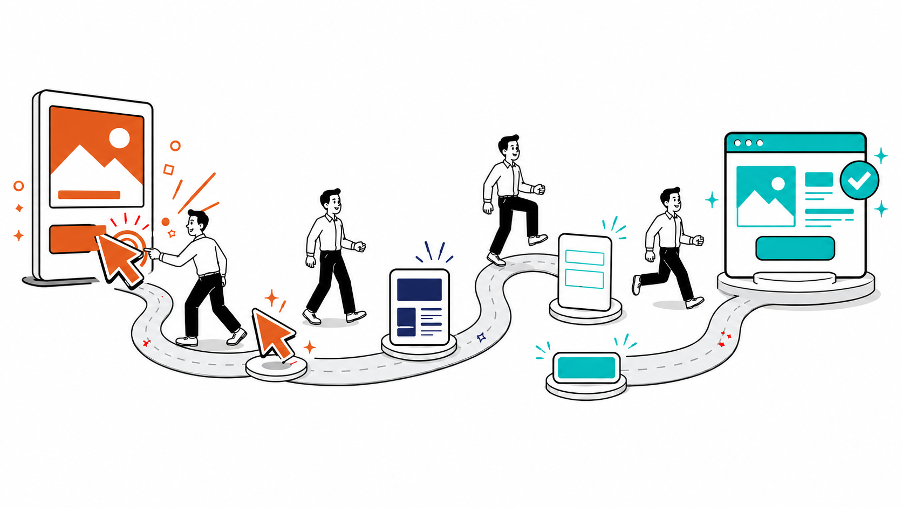
The click is only one stage in a wider customer journey. If your campaign attracts the right person but the landing experience creates friction, further advertising optimisation may simply send more people into the same problem.
This is why Landing Page Optimisation (LPO) needs to be considered alongside paid media performance, measurement and customer experience. The objective is not simply to generate more clicks, but to create a connected journey from the advertisement through to an action that matters to the business.
The Snapshot
- The click is a handover, not the end goal: the landing page needs to continue the expectation created by the ad.
- Poor conversion performance is not always an advertising problem: relevant traffic can still underperform if the post-click experience creates friction.
- Advertising and landing-page performance should be assessed together: targeting, UX, tracking and conversion design all contribute to the same outcome.
- Metrics such as Click Through Rate (CTR) and Cost Per Click (CPC) need context: strong platform metrics do not necessarily translate into qualified leads, sales or revenue.
- Optimisation should be continuous and evidence-led: identify the constraint, test a clear hypothesis and measure the commercial impact.
Advertising is becoming smarter, but it cannot control the whole journey
Advertising platforms continue to improve how they identify audiences, interpret intent and optimise campaigns towards conversions.
On 27 August 2026, Google announced further developments to Demand Gen campaigns designed to help advertisers move potential customers from discovery towards action. Google also reported that improvements tested across Demand Gen during the second half of 2025 produced an average 30% increase in conversions or conversion value.
That does not make landing pages newly important. They have always mattered.
The more useful distinction is between what the advertising platform can influence and what the business still controls.
Google can become better at identifying a relevant potential customer, but it cannot fully compensate for an unclear value proposition, a difficult mobile form, weak trust signals, slow page performance or a landing page that feels disconnected from the advertisement.
As advertising technology becomes more sophisticated, businesses still need to manage the parts of the customer journey that happen after the click.
The ad creates an expectation the landing page needs to continue
Every advertisement creates an expectation.
A search ad may promote a particular service. A product campaign might focus on a specific range. A social advertisement may lead with a customer problem, offer or benefit.
Once someone clicks, the destination should feel like a logical continuation of that message.
This is often referred to as message match. The language, offer, imagery, supporting information and next step on the landing page should align with what encouraged the visitor to click.
Consider someone searching for a specific service, seeing an advertisement that directly addresses their need, then landing on a generic homepage covering six unrelated services. The information they want may technically be there, but they now have to find it themselves.
That creates unnecessary friction.
A stronger Pay Per Click (PPC) landing page confirms that the visitor is in the right place, answers the question raised by the advertisement and makes the next step easy to understand.
Is the traffic poor, or is the post-click experience weak?
One of the most important distinctions in paid media analysis is the traffic quality and whether the customer encountered a positive or negative landing experience.
Both can result in low conversion rates, but they require different responses.
If the traffic itself is poorly aligned, the campaign may need changes to targeting, keywords, audiences, creative or intent signals.
If relevant visitors are arriving but failing to act, repeatedly adjusting the advertising campaign may leave the actual constraint untouched.
Useful diagnostic questions include:
- Are people clicking but leaving without engaging?
- Are visitors reaching the page but failing to begin the intended action?
- Are forms being started and abandoned?
- Is performance noticeably different between mobile and desktop?
- Does the page answer the need expressed by the advertisement?
- Are enquiries being generated but failing to become qualified leads or sales?
These questions shift the analysis from “Are the ads working?” to “Where is the journey breaking down?”
That is a much stronger basis for deciding what to optimise next.
Landing pages are part of advertising performance
Paid media is better understood as a connected sequence:

Each stage affects the next.
An effective advertisement can earn attention but cannot guarantee action. A strong landing page can support conversion but cannot rescue fundamentally irrelevant traffic. Accurate tracking can show what happened, but the data only becomes useful when the business has defined which outcomes actually matter.
Advertising, web experience and analytics therefore need to work together.
This is why landing pages should not be treated as something separate from paid media. Their role is part of the same commercial system.
Friction after the click can undermine relevant traffic
Post-click friction appears whenever the page makes it harder for a visitor to understand the offer, trust the business or complete the next step.
Common causes include:
- Slow page speed
- Poor mobile usability
- Confusing navigation
- Too many competing actions
- Unclear value proposition
- Excessive form fields
- Weak trust signals
- Inconsistent messaging
- Intrusive pop-ups.
The key is not whether one of these issues exists in isolation. The question is whether it is interrupting the visitor’s progress.
For example, a longer form is not automatically bad. If a service requires detailed qualification, additional fields may be useful. If unnecessary fields are causing suitable prospects to abandon the process, the same form becomes a commercial constraint.
The context determines what needs to change.
Mobile deserves to be assessed as its own experience
Paid traffic frequently reaches businesses through mobile devices, yet mobile performance is sometimes treated as a technical checkbox.
A page being responsive does not necessarily mean it provides a good mobile experience.
Businesses should review landing pages on an actual phone and assess the following:
- Load performance
- Readability
- Visual hierarchy
- Button placement
- Form usability
- Navigation
- Intrusive page elements.
Google’s Core Web Vitals framework assesses areas such as loading performance, responsiveness and visual stability, while PageSpeed Insights can help identify technical issues affecting the experience.
The commercial point is simple: if you are paying to attract a visitor, poor mobile usability can create friction immediately after that investment has been made.
Conversion tracking connects the click to the business outcome
Clicks alone cannot tell you whether advertising is commercially effective.
Conversion measurement should extend into meaningful business actions such as purchases, form submissions, bookings, qualified leads, and revenue.
Not every measurable interaction should be treated equally. A button click or page view can help diagnose behaviour, but it should not carry the same importance as a qualified enquiry or completed sale.
Good measurement connects marketing activity to the outcome the business actually values.
It also creates a feedback loop. If a campaign generates large numbers of leads but very few qualified opportunities, that insight should influence future targeting, messaging and landing-page decisions.
A high CTR does not automatically mean a successful campaign
Advertising metrics need to be interpreted as part of the wider system.
A higher click-through rate can indicate that an advertisement is effective at earning attention. A lower CPC can indicate improved media efficiency.
Neither metric establishes whether those clicks create business value.
An advertisement could improve its CTR while sending visitors to a page that converts poorly. Looking only at the advertising platform would suggest improvement, while the commercial result may tell a different story.
The same principle applies across digital marketing. Paid clicks, SEO traffic, email engagement and social interactions are inputs. Their value depends partly on what happens next.
Landing Page Optimisation should be continuous
LPO is better treated as an ongoing process than a one-off redesign.
A practical cycle is:
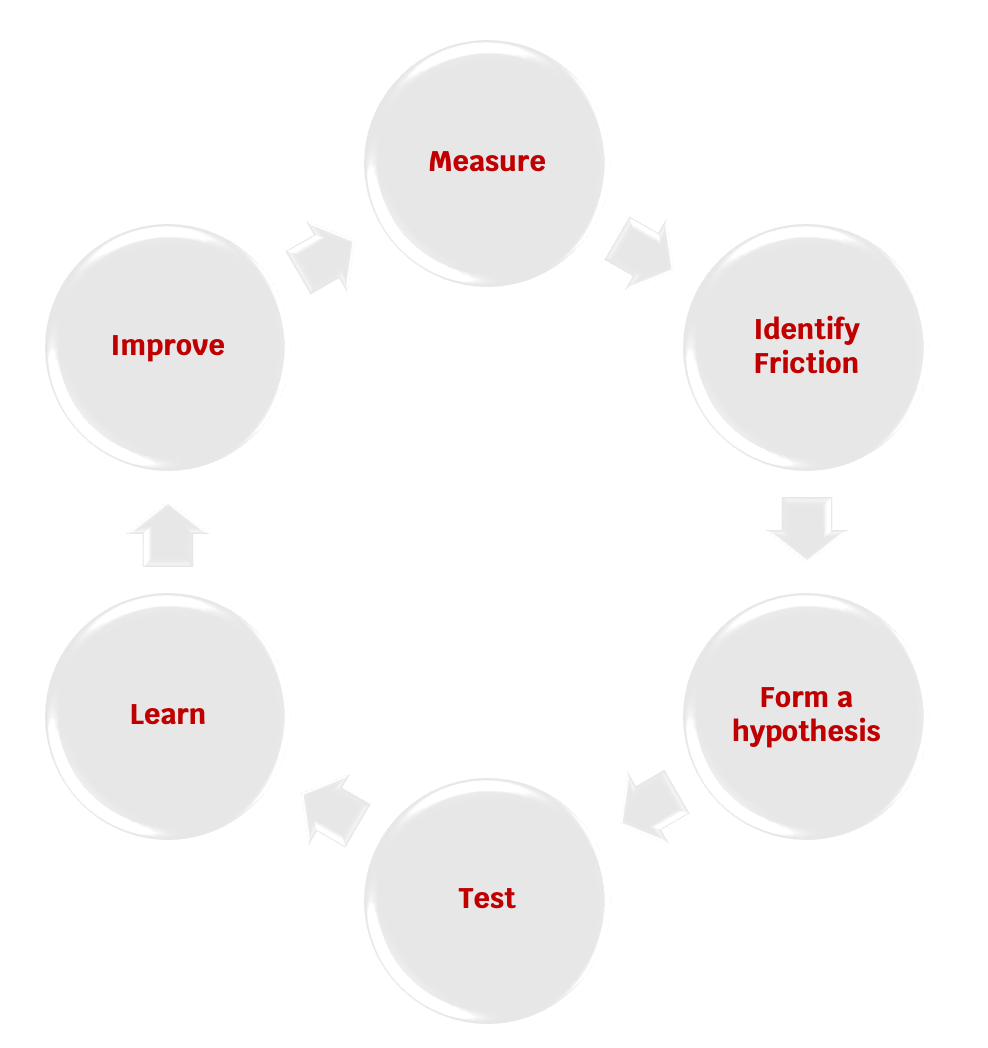
Potential areas to test include headlines, page hierarchy, calls to action, forms, social proof, imagery, mobile layouts and offer presentation.
The important part is having a reason for the change.
Changing a button because it “might work better” offers little strategic value. Identifying that mobile users consistently abandon a form at a particular step, then testing whether simplifying that step reduces friction, creates a clear and useful hypothesis.
That approach keeps optimisation grounded in evidence rather than guesswork.
Assess advertising performance beyond the click
A strong advertising campaign and a strong landing experience solve different parts of the same problem.
Poor targeting will not be fixed by good web design. Equally, sophisticated bidding, strong creative and increasingly capable advertising automation cannot reliably compensate for a weak destination.
The better approach is to diagnose the whole system.
Review what happens before the click, the expectation created by the advertisement, the landing experience, the intended action and the commercial outcome that follows.
That is where LPO becomes more than a website exercise. It becomes part of how advertising, conversion strategy, measurement and the wider customer journey work together.
Final Thoughts
Advertising performance should not be judged at the point of the click. The more useful measure is whether the full journey, from the first interaction through to a meaningful business outcome, is working as intended. Strong advertising can bring the right people to the door, but sustainable performance depends on what happens once they arrive.