Most businesses already have plenty of marketing activity.
SEO is running. Google Ads or Meta Ads are generating traffic. Social content is being published. Emails are going out. The website is receiving visitors.
Yet growth can still feel harder than it should.
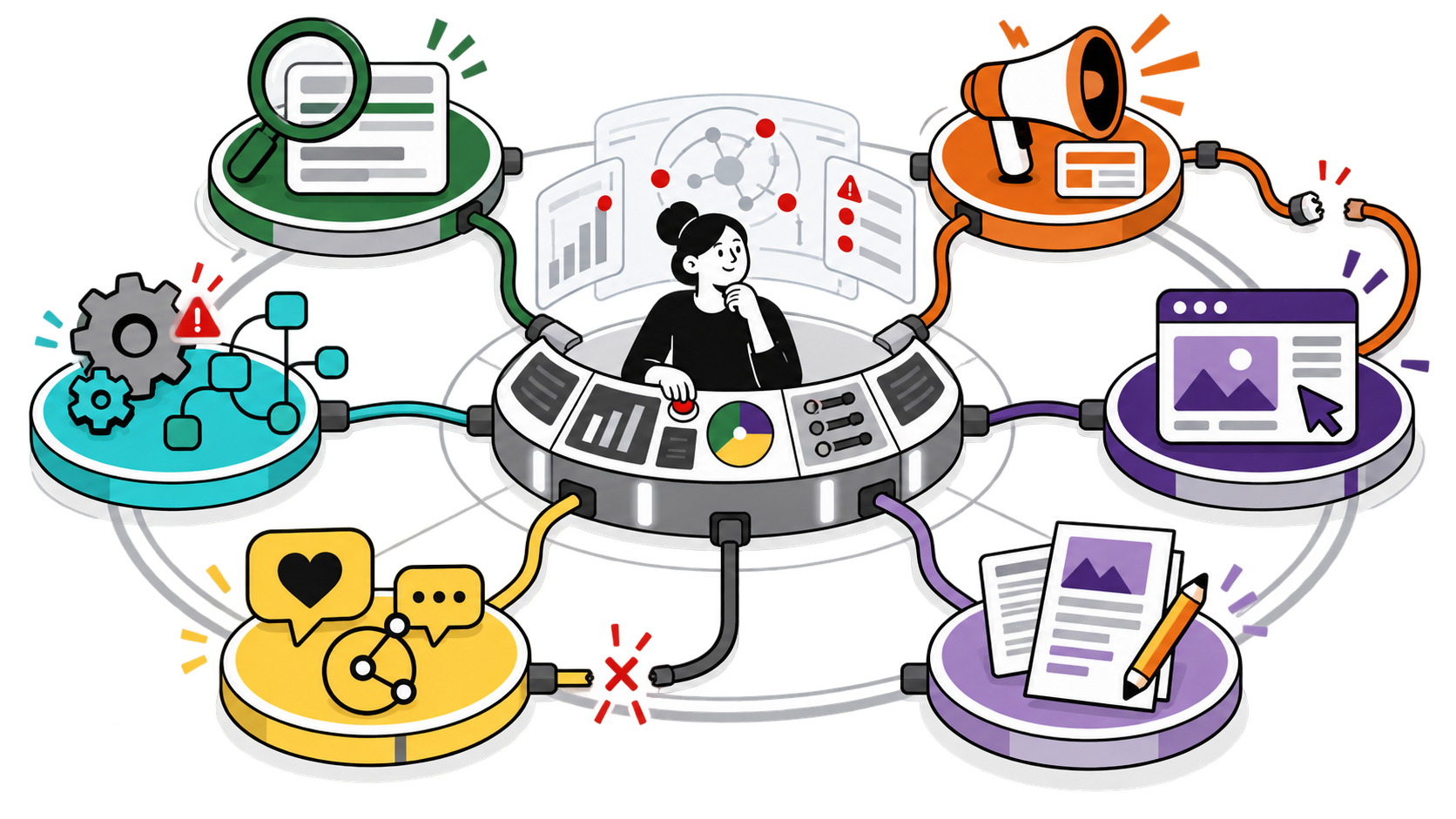
The reason is often not a lack of marketing. It is that the business has not identified where the customer journey is actually breaking down.
One company may have a strong product or service but struggle to get in front of the right audience. Another may attract healthy website traffic but convert very little of it into qualified enquiries or sales. Another may acquire customers successfully, then do very little to nurture those relationships afterwards.
Each business has a different constraint, so each needs a different response.
This is where Omni’s AI planning tools and 360° Growth Plan work together. Omni’s AI tools can help businesses assess their current position, organise information and surface potential gaps.
Our framework:

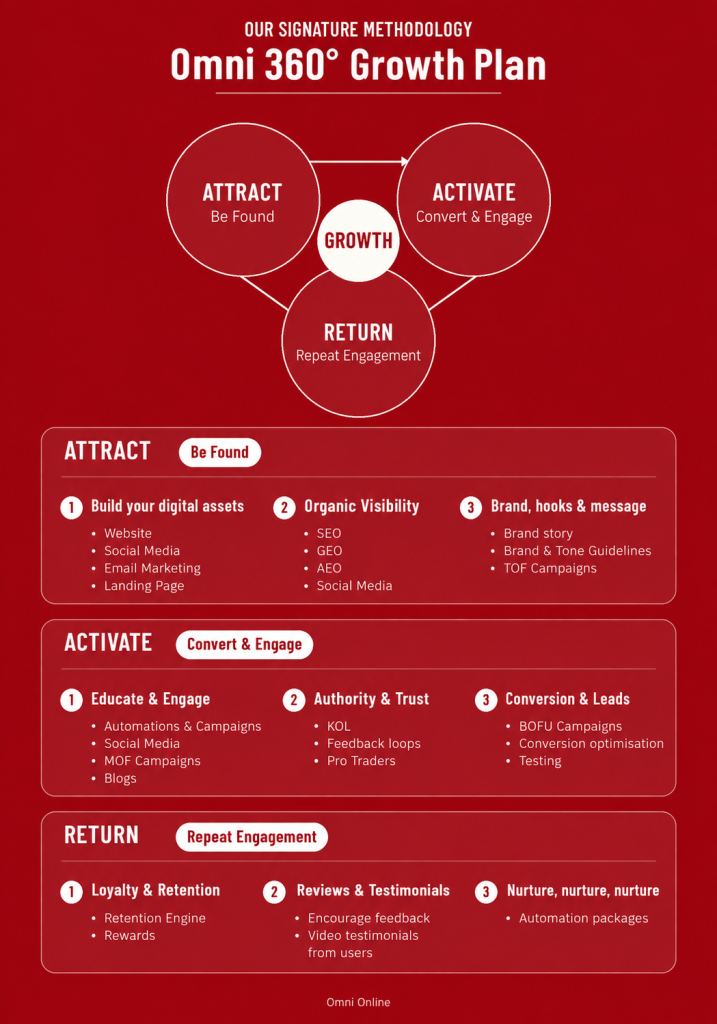
Provides a practical structure for deciding what part of the customer journey deserves attention to maximise growth.
The objective is not to use AI to create more marketing. It is to identify the right problem first, then make the work required to solve it more efficient.
Snapshot: Where could your growth be getting stuck?
-
- How to identify where growth is getting stuck before adding more marketing activity.
-
- The difference between ATTRACT, ACTIVATE and RETURN, and what each stage can reveal about your customer journey.
-
- How Omni’s 360° Growth Plan helps diagnose the real gap, whether that sits in visibility, conversion or retention.
-
- How AI can support the process by helping organise information, identify patterns and streamline repetitive marketing work.
-
- Why the right sequence matters, so businesses improve the part of the system that is actually limiting growth rather than simply doing more.
Start with the business problem, not the marketing tactic
When growth slows, businesses often respond by increasing activity.
-
- More ads.
-
- More content.
-
- More emails.
-
- More social posts.
Sometimes that is appropriate. Often, it treats the symptom rather than the cause.
If your paid campaigns already generate traffic but your landing pages are weak, increasing the advertising budget sends more people into the same poor experience.
If your website converts well but few relevant people discover it, redesigning the enquiry form is unlikely to solve the problem.
If customer acquisition is strong but repeat purchase is weak, another awareness campaign may not be the most commercially valuable next move.
Omni’s approach begins by looking at the wider marketing system. Our digital strategy considers areas such as business goals, audience, website performance, SEO, paid media, content, automation, reporting and the customer journey before individual tactics are prioritised.
How AI planning can help identify the pain point
An AI plan generator such as Omni’s can be useful at this stage because the problem is often not a lack of information. It is that the information sits in different places.
Your website tells one part of the story. Google Analytics tells another. Search Console, advertising platforms, CRM data, email performance and sales feedback all provide different signals.
Used appropriately, AI can help organise those inputs and highlight questions worth investigating.
For example, it may help your team identify:
-
- Where traffic is coming from
-
- Which pages receive attention but little action
-
- Which customer questions repeatedly appear
-
- Where marketing messages differ between channels
-
- Which parts of the customer journey lack follow-up
-
- Where information or measurement is missing
That does not make AI the decision-maker.
Its role is to help structure the information so the business can ask better questions. Findings still need to be checked against the original data, business context and customer behaviour.
Omni’s own approach to AI follows the same principle: AI can assist with structure and drafting, but judgement, positioning and strategic decisions remain human responsibilities.
Once the likely gap is understood, the 360° Growth Plan provides the next lens.
ATTRACT: Are enough of the right people finding you?
Consider a business with a strong offer, good customer feedback and a functioning website, but inconsistent new business.
The immediate assumption may be that sales needs work.
The actual issue could be ATTRACT.
ATTRACT looks at whether the right people can find and understand your business in the first place.
That can involve:
-
- Search Engine Optimisation
-
- Google Ads and Meta Ads
-
- Content marketing
-
- Social media
-
- Website visibility
-
- Landing pages
-
- Brand positioning
-
- Search and audience research
The important distinction is right people, not simply more traffic.
SEO should target relevant search intent. Paid media should reach audiences with a genuine connection to the offer. Content should address questions potential customers are actually asking.
Where AI makes ATTRACT more efficient
AI can reduce some of the repeated preparation involved in this work.
Customer questions can be organised into content themes, existing research can be summarised into briefs and approved messaging can be adapted into initial social, advertising and content drafts.
This allows one useful customer insight to support several channels without requiring the team to start from scratch each time.
But AI does not replace keyword validation, technical SEO, campaign targeting or brand strategy.
The goal remains relevant visibility, not simply higher content output.
ACTIVATE: Are you turning attention into action?
Another business may have the opposite problem. Traffic is healthy, ads are receiving clicks and people are visiting product or service pages. Yet enquiries, bookings or sales remain below expectations.
That business does not necessarily need more ATTRACT activity. It may need to strengthen ACTIVATE.
Omni’s ACTIVATE stage considers what helps someone progress from interest towards action:
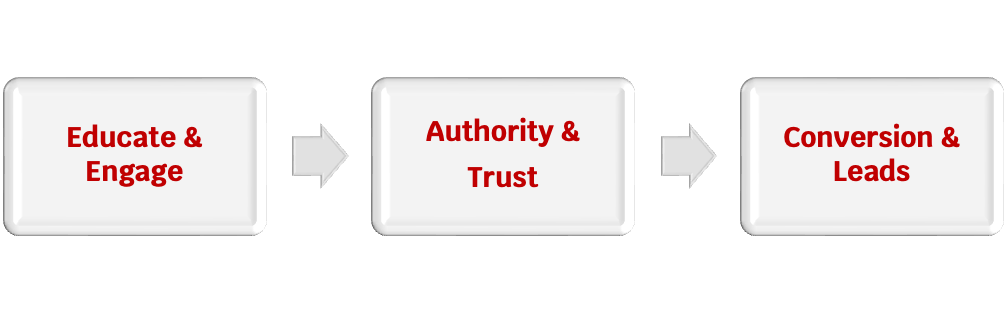
That can include:
-
- Better service or product pages
-
- More relevant landing pages
-
- Case studies and testimonials
-
- Email nurturing
-
- Retargeting
-
- Stronger calls to action
-
- Clearer enquiry or checkout journeys
-
- Conversion optimisation
This is where channel integration becomes especially important.
If an advertisement promises one thing and the landing page talks about something else, the customer has to bridge the gap themselves.
If someone downloads a guide but receives no useful follow-up, part of the journey is missing.
Where AI makes ACTIVATE more efficient
AI can help teams adapt approved campaign messaging across advertisements, landing pages, email sequences and supporting content.
It can also help organise customer objections, identify repeated questions and prepare alternative messaging for structured testing.
The actual customer experience still needs human review with forms needing testing, or mobile usability that has to be checked, even identifying if conversion tracking needs work and lead quality being assessed.
A better AI-generated headline cannot repair a broken checkout.
RETURN: What happens after someone becomes a customer?
The third growth gap is often overlooked.
A business may perform well at ATTRACT and ACTIVATE, then put very little structure around what happens after conversion.
Customers purchase once, leads become clients, then communication becomes irregular or disappears completely.
RETURN focuses on extending the relationship through:
-
- Customer onboarding
-
- Education
-
- Email nurturing
-
- Review requests
-
- Re-engagement
-
- Repeat purchase
-
- Loyalty
-
- Retention activity
For many businesses, sustainable growth depends partly on making better use of the relationships they have already earned.
Where AI makes RETURN more efficient
AI can assist with preparing onboarding material, follow-up communications, educational emails and re-engagement content using approved business information.
Automation then helps deliver those communications according to relevant triggers and customer behaviours.
These are related but different functions.
AI can help prepare the message. Automation helps determine when and where it is delivered.
Omni’s automation approach similarly considers customer journeys, funnels, behavioural information and tailored messaging rather than treating automation as a collection of isolated email sequences.
Final thoughts: Identify the constraint before increasing activity
If your business is investing in marketing but growth still feels inconsistent, the question should not automatically be, “What else should we add?”
Start by asking where the customer journey is getting stuck.
Are enough of the right people finding you?
Are they progressing once they arrive?
Are you maintaining the relationship after they convert?
Omni’s framework:

provides a structured way to investigate those questions. AI planning tools can support the diagnostic process and make parts of the work more efficient, while Omni’s Growth Evolution Path helps determine how the business progresses from there.
The aim is not more marketing activity.
It is knowing which part of the system deserves attention next, then improving it deliberately.