Black Friday has become one of the most significant periods in the Australian retail calendar, but higher sales do not automatically make it a successful marketing event.
For businesses planning a Black Friday marketing strategy in 2026, the more important question is whether additional sales translate into commercially worthwhile growth once discounts, advertising costs, fulfilment, returns and customer acquisition are taken into account.
The scale of the opportunity is difficult to ignore. CommBank reported that Australians spent $23.8 billion during the two-week Black Friday period in 2025, with online spending reaching $8 billion, up 9.3% year on year.
Black Friday is also no longer confined to one weekend. The Australian Bureau of Statistics has observed retailers extending promotional activity across November, while some Christmas spending has shifted forward as consumers wait for November discounts.
That makes Black Friday less of a four-day campaign and more of a business-wide test involving advertising, content, SEO, email, automation, website performance, measurement and retention.
Before increasing budgets or building promotional calendars, businesses should be able to answer the following 12 question
Before Black Friday: Is Your Black Friday Marketing Strategy Commercially Sound?
1.Should a business be discounting because everyone else is?
Miranda – Director of Strategy & Client Success
This might be controversial, but yes, with a fairly significant asterisk.
You should never discount simply for the sake of participating. However, BFCM is one of the few times of year when customers are actively prepared to spend, and they’re likely comparing your offer with your competitors’. In a challenging economic climate, opting out entirely can mean losing customers who were already considering buying from you.
That said, the decision still needs to make commercial sense. Consider your margins, brand positioning, customer behaviour and wider business objectives. A premium brand, for example, might use a gift with purchase, exclusive bundle or another value-add rather than a sitewide discount.
The goal is to give customers a compelling reason to buy without unnecessarily eroding your margins or training them to wait for the next sale.
2. What business outcome should companies aim to try and create?
Miranda – Director of Strategy & Client Success
One of the biggest misconceptions about BFCM is that it’s simply a flash sale designed to create a short-term revenue spike. We at Omni Online see it as an opportunity to lay the groundwork for the year ahead. Before planning the campaign, businesses need to define what success actually means, whether that’s revenue, new customer acquisition, inventory clearance, database growth, increasing average order value or re-engaging lapsed customers.
Each objective needs a different offer, audience strategy and campaign structure. If acquisition is the priority, track the customers acquired during BFCM and measure their repeat purchase rate, lifetime value and profitability afterwards. The real outcome isn’t necessarily what happens during the promotional period itself, but the longer-term value created from the customers, data and purchasing behaviour it generates.
3. If your Return On Ad Spend (ROAS) looks good, could your Black Friday campaign still be unprofitable?
Ned – Google Paid & Organic
Yes, definitely. ROAS is useful, but it only compares the revenue attributed to advertising with the amount spent on the ads. It doesn’t tell you whether the business actually made a profit. For Black Friday, you also need to account for discounts, product costs, shipping, fulfilment, payment fees, returns and any additional campaign costs.
Platform reporting also needs to be treated carefully, as Meta and Google can both claim the same sale. A strong reported ROAS can still leave you with a very small margin, or even a loss, once everything is taken into account. The main takeaway is that ROAS is only one part of the picture. You also need to look at actual sales, total campaign costs and the contribution margin left after fulfilling the order
4. Are businesses acquiring customers, or discounting to people who would have bought anyway?
Ned – Google Paid & Organic
This is a major consideration during Black Friday. Existing customers may already be planning to buy and are simply waiting for the discount, which means the promotion has not necessarily created new demand. Retargeting can also make performance look stronger than it really is because it focuses on people who have already shown an interest in the brand.
To get a clearer picture, I would look at the split between new and returning customers, the cost of acquiring each new customer, and whether those customers come back after Black Friday. It is also worth reviewing the weeks before and after the sale to see whether demand was simply delayed or brought forward. For me, a successful campaign should not just produce a high ROAS, it should generate profitable sales, reach genuinely new customers and create value beyond the promotional period.
5. Does starting Black Friday earlier help, or simply extend the period you sell at lower margins?
Noha – Digital Marketing Specialist
Starting Black Friday earlier is not automatically a better strategy. Planning should absolutely start early, with your offer, creative, audiences, inventory, email strategy and retention plan mapped out well before November. But that doesn’t mean your discounts need to go live earlier. An extended promotional period can help capture more demand, but it can also mean more days selling at a reduced margin and greater promotional fatigue.
Rather than asking how early you can launch, think about the role each stage of the campaign should play. Use the lead-up to build awareness, grow your audience, capture intent and nurture prospective customers, then use the promotional window deliberately based on your margins, buying cycle and customer behaviour. Starting your planning earlier gives you an advantage. Starting your discounting earlier only makes sense if the additional demand justifies the margin you’re giving away.
6. How can a company build demand before Black Friday even starts ?
Arpita – Social Media Paid & Organic
The biggest mistake brands make with Black Friday is waiting until Black Friday to start selling. Competition is intense, advertising costs rise and customers are flooded with offers, so trying to introduce your brand, build trust and drive a purchase all at once can make acquisition unnecessarily expensive. A stronger approach is to build familiarity and intent before the rush begins.
SEO and organic content can reach customers while they’re still researching, social can keep products top of mind, and email can nurture existing customers through previews, wish lists or early access. Paid media should also start working before the conversion push, building awareness and remarketing audiences ahead of peak competition. Black Friday should be the moment demand converts, not the moment demand starts.
During Black Friday: How to ensure success
7. How can competitive companies ensure their website is strong enough to justify spending more on traffic?
Kachi – Front-end Designer & Developer
Before spending more to drive traffic, the website experience needs to be strong enough to convert it. That means looking at the basics first: mobile usability, page speed, clear CTAs, consistent landing pages, stock visibility and a checkout process with as little friction as possible. Better imagery and strategically placed CTAs across key pages can also help keep visitors engaged and moving towards action.
My advice? Content should be easy to scan rather than presented in large blocks, with information revealed gradually as the visitor moves down the page. For ecommerce sites, showing products in different formats, including collections and bundles, can also make it easier for visitors to find something relevant. More media spend cannot compensate for a poor conversion experience, so the website and tracking should be working properly before traffic is scaled.
8. Are your channels working together, or competing to take credit for the same sale?
Danny – Founder & CEO
Start by thinking about how customers actually interact with your brand across the journey. Someone might see a social post, click a Meta ad, visit your website, receive an email, return through organic search and finally convert through Google Ads. With so many touchpoints influencing the decision, businesses need to make sure they are showing up consistently across the channels customers use.
The challenge is that several platforms may then claim credit for the same conversion, which can overstate the contribution of individual channels. Rather than asking which channel “won”, look at the overall journey across paid search, paid social, email, organic and direct traffic, and understand how those channels worked together to build awareness, create demand and ultimately convert the customer.
9. Should companies be optimising for revenue, or the products and customers that are actually valuable?
Danny – Founder and CEO
Revenue alone can be a misleading measure of Black Friday success. A campaign may generate strong sales while heavily discounting low-margin products, acquiring customers at an unsustainable cost or generating purchases from existing customers who may have bought anyway.
Businesses should also consider contribution margin, customer acquisition cost, average order value, product mix and the balance between new and returning customers. The goal should not simply be to maximise revenue, but to identify the products, audiences and offers that create profitable, sustainable growth
10. Should companies increase their budget simply because Black Friday demand is higher?
Miranda – Director of Strategy & Client Success
No. Higher demand does not automatically justify a higher advertising budget. Your budget should be based on expected net sales, historical performance during the period, likely increases in CPC and CPA, available stock and, most importantly, profitability.
Media costs generally rise during BFCM, so simply spending more can quickly lead to diminishing returns. The question is not whether demand is higher, but whether the additional spend is still commercially viable once higher acquisition costs, stock levels and margins are taken into account.
After Black Friday: Analysis and Key Takeaways
11. Did Black Friday generate additional revenue, or bring Christmas purchases forward? Why should this be analysed?
Danny – Founder & CEO
A strong November does not necessarily mean Black Friday generated additional revenue. Some customers may simply make purchases in November that they would otherwise have made in December, particularly as Black Friday increasingly becomes part of the broader Christmas shopping period.
Comparing sales, customer behaviour and previous years can help determine whether the campaign generated genuinely new demand or simply changed when customers purchased.
If Black Friday mainly shifts existing demand forward while reducing margins, its commercial value may be lower than the headline sales figures suggest. Understanding this gives businesses a much better basis for deciding how aggressively to participate next year.
12. Did you acquire future customers, or one-off discounted transactions?
Noha – Digital Marketing Specialist
Black Friday revenue tells you what happened during the promotion, not if the campaign created long-term growth. A stronger measure is what those customers do next: do they make a second purchase, how quickly do they return, and do they come back without another significant discount? If customers disappear once normal pricing returns, you may have generated transactions without building a valuable customer base.
That’s why Black Friday analysis should continue well beyond November. Track repeat purchase rate, average order value, retention and lifetime value, then look at the post-purchase experience supporting those customers through email, SMS, loyalty and remarketing. The goal is not simply to acquire more customers during Black Friday, but to turn heightened demand into customers who have a reason to return.
Black Friday Should Test the Whole Marketing System
A strong Black Friday marketing strategy is not defined by how many campaigns launch in November or how large the promotional discount appears.
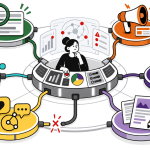
It tests whether the business understands its economics, audience, customer journey and operational constraints. It also reveals whether paid media, SEO, content, social, email, automation and the website are operating as one connected system.
For some businesses, Black Friday will justify significant investment. For others, a smaller promotion, an alternative offer or no participation at all may be the more commercially sensible choice.
The important part is making that decision deliberately.
Before allocating additional Black Friday budget in 2026, review whether you can answer these 12 questions with evidence rather than assumptions. Any question that remains difficult to answer is likely to identify an area worth addressing before November.