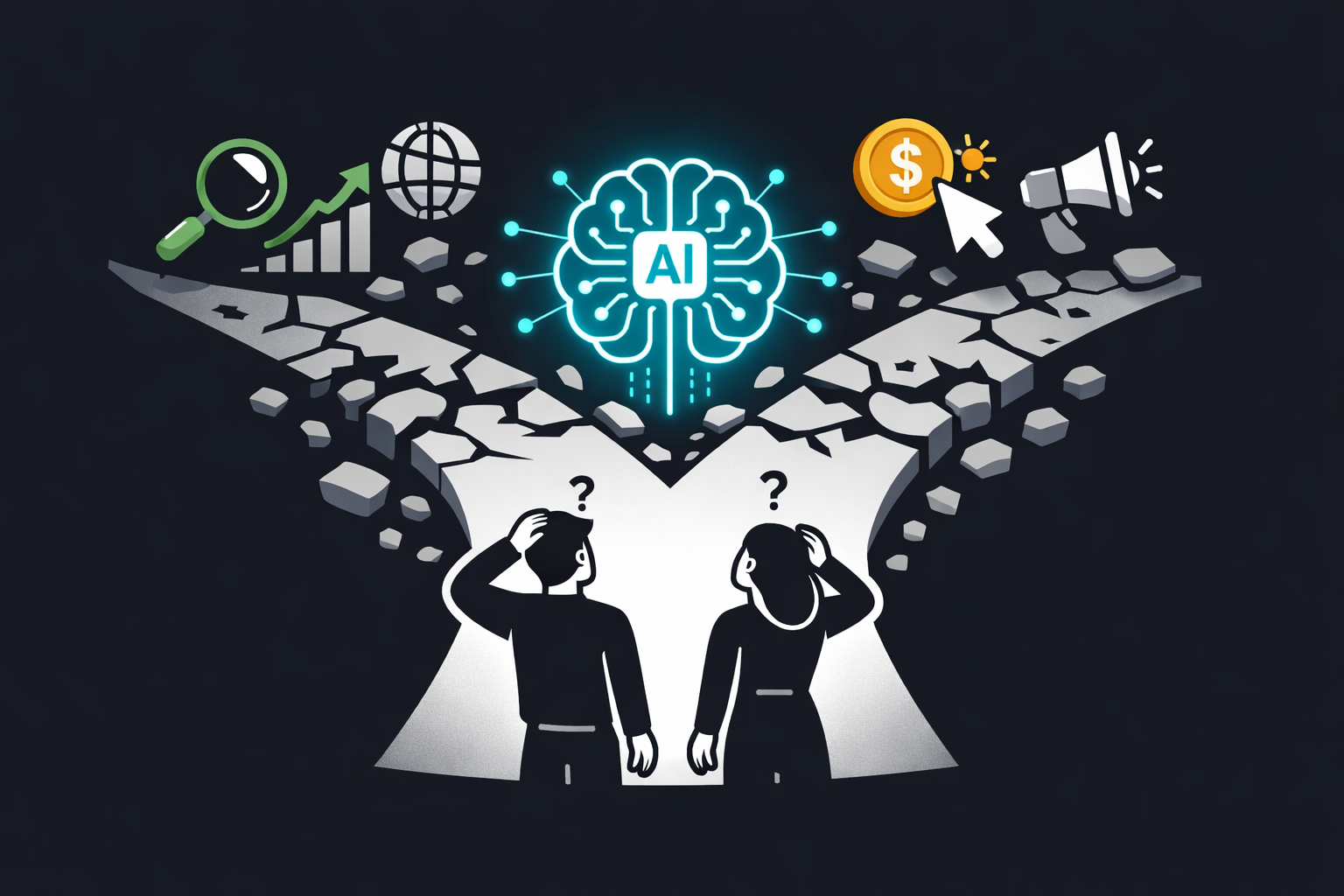
Sustainable Growth Isn’t Channel-Driven, It’s Strategy-Led
The “organic vs PPC” debate has been repeated for years, often framed as a choice between two competing channels. With AI increasingly shaping how users discover information, that framing continues to create more confusion than clarity.
At a broader level, it also reflects a deeper issue in how digital marketing is approached. Channels are often treated in isolation, measured independently, and optimised without considering how they influence each other.
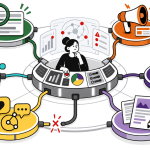
In reality, digital marketing doesn’t operate in silos. It functions as a connected system, where each channel plays a different role but contributes to the same outcome.
Organic visibility is also evolving. Search is no longer limited to traditional rankings; with AI-generated results, summaries, and conversational interfaces now shaping how users discover brands. This adds another layer to the organic vs PPC discussion, where visibility is not just about ranking, but about being included in how information is interpreted and delivered.
Therefore the real decision isn’t whether to invest in organic visibility or paid advertising. It’s how to allocate resources between short-term demand capture and long-term demand creation, and how to structure those channels so they work together rather than compete.
This is why channel decisions should never be made in isolation. The right mix of organic visibility and PPC depends on where the business currently sits, its growth stage, cash flow pressure, and existing marketing assets. Without that context, channel selection becomes reactive rather than strategic.
Blog in a Snapshot
In this article, we’ll reframe the conversation, covering:
- Why the “organic vs PPC” debate is flawed, and how the real focus should be system design, which then dictates channel selection
- How PPC captures existing demand and drives immediate visibility
- How organic builds long-term equity, trust, and cost efficiency across both traditional search and AI-driven discovery
- How AI search is reshaping organic visibility, where inclusion and trust signals now influence how brands appear
- Why these channels serve different roles across the customer journey
- Why over-reliance on one channel creates either cost pressure or slow growth
The Real Difference: Timing vs Compounding
At a functional level, the difference between organic and paid marketing is straightforward.
- PPC (pay-per-click) delivers immediate visibility and controlled traffic
- Organic (SEO, content and social) builds visibility over time, compounding in value. But that definition is starting to become incomplete with the rise of GEO.
- GEO: Organic is no longer just about ranking in traditional search results. It now includes how your brand appears across AI-driven search environments, including generative search results, summaries, and conversational interfaces.
A more accurate distinction now looks like:
- PPC: Immediate demand capture
- This is about timing. You can activate campaigns, control spend, and capture demand as it exists today. Visibility is predictable, but it is directly tied to budget.
- Organic: Compounding visibility
- The effort today won’t likely generate immediate results, but rather will continue to generate results months or years later through search rankings, content libraries, brand familiarity and audience engagement.
- AI Search Visibility: Emerging layer of organic
- Instead of clicking through multiple results, users are increasingly relying on AI-generated summaries, featured answers, and conversational responses. This adds a new layer to organic, where content must be structured to be interpreted and surfaced by AI.
These are essential, but they solve different problems within the same system.
The role each channel plays should be determined by a broader strategy, not preference. In practice, this means assessing what the business needs most right now, immediate demand, long-term visibility, or both, and allocating investment accordingly.
Why “Either/Or” Thinking Leads to Poor Strategy
Many businesses default to either organic or PPC based on internal pressure rather than strategic alignment.
Common scenarios include:
- A new business prioritising PPC because it needs immediate leads
- An established brand leaning heavily into SEO to reduce acquisition costs
- A budget-constrained team choosing one channel to “simplify” execution
The issue is not the choice itself, but the assumption that one channel can carry the entire growth system. This creates predictable risks:
- Over-reliance on PPC leads to rising costs and no long-term equity
- Over-reliance on organic leads to slow growth and missed short-term opportunities
- Weak organic strategy increasingly means reduced visibility across both search rankings and AI-generated results
A more effective approach starts with an audit of the current position. Where is demand already coming from? Where are the gaps across the funnel? Which channels are underperforming or over-relied on? These answers should guide channel allocation, not assumptions about what “works best”.
If you are choosing between them, the strategy is already misaligned.
The Role of PPC: Immediate Demand Capture and Testing
PPC is often misunderstood as a short-term tactic rather than a strategic tool.
In practice, it serves three critical roles:
1. Capturing Existing Demand
PPC allows you to appear in front of users actively searching for solutions. This is particularly valuable for high-intent queries, where timing directly influences conversion.
Industry data consistently shows that paid search occupies a meaningful share of clicks on commercial queries, reinforcing its role in demand capture.
2. Accelerating Learning
PPC provides immediate feedback on:
- Messaging
- Offers
- Landing page performance
- Audience targeting
This becomes more important as AI search evolves. Insights from PPC, particularly around messaging, intent, and conversion triggers, can inform how content is structured for both rankings and AI-driven visibility.
3. Bridging the Gap While Organic Visibility (SEO & AI Search) Matures
SEO takes time to build authority and rankings. PPC acts as a bridge, allowing businesses to generate traffic and revenue while organic efforts compound.
However, there is a clear trade-off.
PPC results disappear when spend stops. It doesn’t build a lasting asset, rather paid advertising works best when it supports a broader strategy rather than operating in isolation .
The Role of Organic: Building Long-Term Equity
Organic channels, including SEO, AI search and social media, are often labelled as “slow”. While that’s accurate, it’s also incomplete.
What they lack in speed, they make up for in structural advantage.
SEO: Asset-Based Traffic
SEO builds a library of content and authority that continues to generate traffic over time.
Key benefits include:
- Lower marginal cost per acquisition as rankings improve
- Increased credibility and trust through search visibility
- Ongoing traffic without direct spend
Widely cited benchmarks suggest that SEO-driven leads convert at significantly higher rates than outbound channels, largely due to intent and trust.
AI Search Visibility: Presence Beyond Rankings
Organic visibility in the age of AI is no longer limited to traditional search rankings.
AI-driven search experiences, including summaries, featured answers, and conversational responses, are changing how users discover and evaluate information. In many cases, users are forming decisions without ever clicking through to a website.
This introduces a different type of visibility.
You’re not just competing to rank, but to be referenced and included in how AI systems interpret and present information.
This shifts how organic content needs to be approached:
- Content must be structured clearly so it can be interpreted and extracted
- Topical authority becomes more important than isolated keyword rankings
- Consistency across content, messaging, and brand improves likelihood of inclusion
- Trust signals influence whether your content is considered credible enough to surface
Unlike traditional SEO, where position drives traffic, AI search visibility is about inclusion. If your content is not trusted as a reliable source, it is less likely to be referenced at all.
From a strategic perspective, this strengthens the role of organic.
It is no longer just a traffic channel, but a visibility layer that influences how your brand appears across both search engines and AI-driven discovery environments.
Organic Social: Familiarity and Retention
Organic social plays a different role, building:
- Brand familiarity
- Ongoing engagement
- Community and audience retention
While it may not drive immediate conversions at scale, it strengthens brand presence and supports conversion across other channels. The strategic advantage is clear: organic doesn’t just generate traffic, it reduces your dependence on paid media over time.
It’s now becoming more evident where integration becomes practical. For example:
- High-performing Meta ads often reveal which creative angles should be reinforced in organic social
- SEO data can inform Google Ads keyword targeting and landing page structure
- Organic content builds familiarity that improves paid conversion rates
How Organic and PPC Work Together Across the Funnel
Organic and PPC each play important roles, but their impact is limited in isolation. The real value is realised when both are aligned within a broader strategy and working together across the customer journey. This only works when the journey is designed intentionally. Each channel should support the others, rather than operating as separate campaigns.
Awareness Stage
- Organic: SEO blog content, educational resources, social content, structured to appear in both search rankings and AI-generated responses
- PPC: Paid social, YouTube, and display campaigns
Here, organic builds visibility and trust, while paid accelerates reach.
Consideration Stage
- Organic: Guides, case studies, comparison content. At this stage, well-structured content increases the likelihood of being surfaced in AI summaries, where users are actively comparing options.
- PPC: Retargeting campaigns and mid-funnel ads
Organic nurtures interest, while PPC keeps your brand visible during evaluation.
Conversion Stage
- Organic: High-intent landing pages and product pages
- PPC: Branded search ads and bottom-funnel campaigns
PPC captures demand at the moment of intent, often influenced by earlier organic touchpoints.
Retention Stage
- Organic: Email content, social engagement
- PPC: Remarketing and loyalty campaigns
Both channels reinforce ongoing engagement and repeat behaviour.
The key dynamic is this:
- PPC amplifies what organic builds
- Organic reduces the cost and dependency of PPC over time
This is not channel competition, it’s system alignment.
The Hidden Cost of Choosing Only One Channel
Single-channel strategies often appear efficient in the short term, but create long-term constraints.
PPC-Only Risks
- Rising cost per click as competition increases
- No residual value once spend stops
- Dependence on platform algorithms and policies
Organic-Only Risks
- Slow ramp-up in traffic and revenue
- Limited ability to test messaging quickly
- Missed opportunities for immediate demand capture
- Poor content structure limiting visibility in both search rankings and AI-driven results
In both cases, the issue is not the channel, it’s the lack of system design.
Single-channel strategies don’t fail because the tactic is wrong, they fail because the system is incomplete. In most cases, the issue isn’t execution within the channel. It’s that the broader strategy hasn’t been designed to connect them.
When to Prioritise Organic vs PPC
While both channels should be part of the strategy, the weighting should shift based on business stage.
Startup or New Website
- Priority: PPC with foundational SEO
- Rationale: Immediate traffic is needed, but organic foundations must be established early
Growth Phase
- Priority: Balanced investment
- Rationale: Scale demand while improving efficiency through organic channels
Established Brand
- Priority: SEO, content, and brand, supported by efficient PPC
- Rationale: Reduce acquisition costs and strengthen long-term positioning
Locking into one approach too early creates friction later, especially when scaling.
Why Channel-Level ROI Is Often Misleading
Many businesses evaluate performance using channel-level ROI, which creates distorted decision-making.
Key issues include:
- Last-click attribution often undervalues organic contributions
- PPC appears more effective because it captures existing demand
- Organic efforts that influence earlier stages go uncredited
A more accurate view includes:
- Blended customer acquisition cost (CAC)
- Assisted conversions across channels
- Full customer journey touchpoints
- Visibility across both traditional search and AI-generated results (often untracked in standard analytics)
If you measure channels in isolation, you will optimise for the wrong outcomes. Measurement should reflect the system, not just the channel, otherwise strategy will drift toward what is easiest to track rather than what drives sustainable growth. However, AI search does introduce a measurement gap, where influence may increase even if clicks do not, making channel-level attribution even less reliable.
Conclusion
The question of organic vs PPC misses the point.
What actually matters is how you balance timing and compounding, and how well your channels work together as a system.
PPC provides immediate access to demand, supports testing, and drives short-term revenue. Organic builds long-term equity, strengthens brand credibility, and increasingly determines how your business appears across both traditional search and AI-driven discovery.
The most effective strategies don’t choose between them, they use PPC to validate and accelerate, while building organic assets that compound over time.
If your current approach leans heavily in one direction, the next step isn’t to switch channels, it’s to step back and assess the system. That starts with understanding where your business is today, identifying the gaps across the customer journey, and aligning each channel to a clear role within that structure.
Sustainable growth doesn’t come from choosing the right channel. It comes from building a strategy where each channel strengthens the others over time.