Your business can have: a polished website, a five star review, a viral reel…but none of these actually build lasting trust on their own.
Trust is created across your entire digital ecosystem. Every search result, advertisement, review, webpage, email and customer interaction either strengthens confidence or introduces doubt.
That matters not only to the people evaluating your business, but increasingly to the AI platforms deciding whether your business is credible enough to mention, cite or recommend.
Blog In A Snapshot
- Customers assess your business across multiple channels, not one isolated touchpoint.
- Trust grows when your messaging, proof and customer experience consistently support each other.
- Contradictions between touchpoints create trust gaps that weaken conversions.
- AI search systems also rely on signals of reliability, authority, relevance and consistency.
- Building trust requires a connected approach across Attract, Activate and Return.
Customers Experience One Business, Not Separate Channels
Internally, you may separate your marketing into SEO, advertising, social media, content, email and web development.
But your customers don’t.
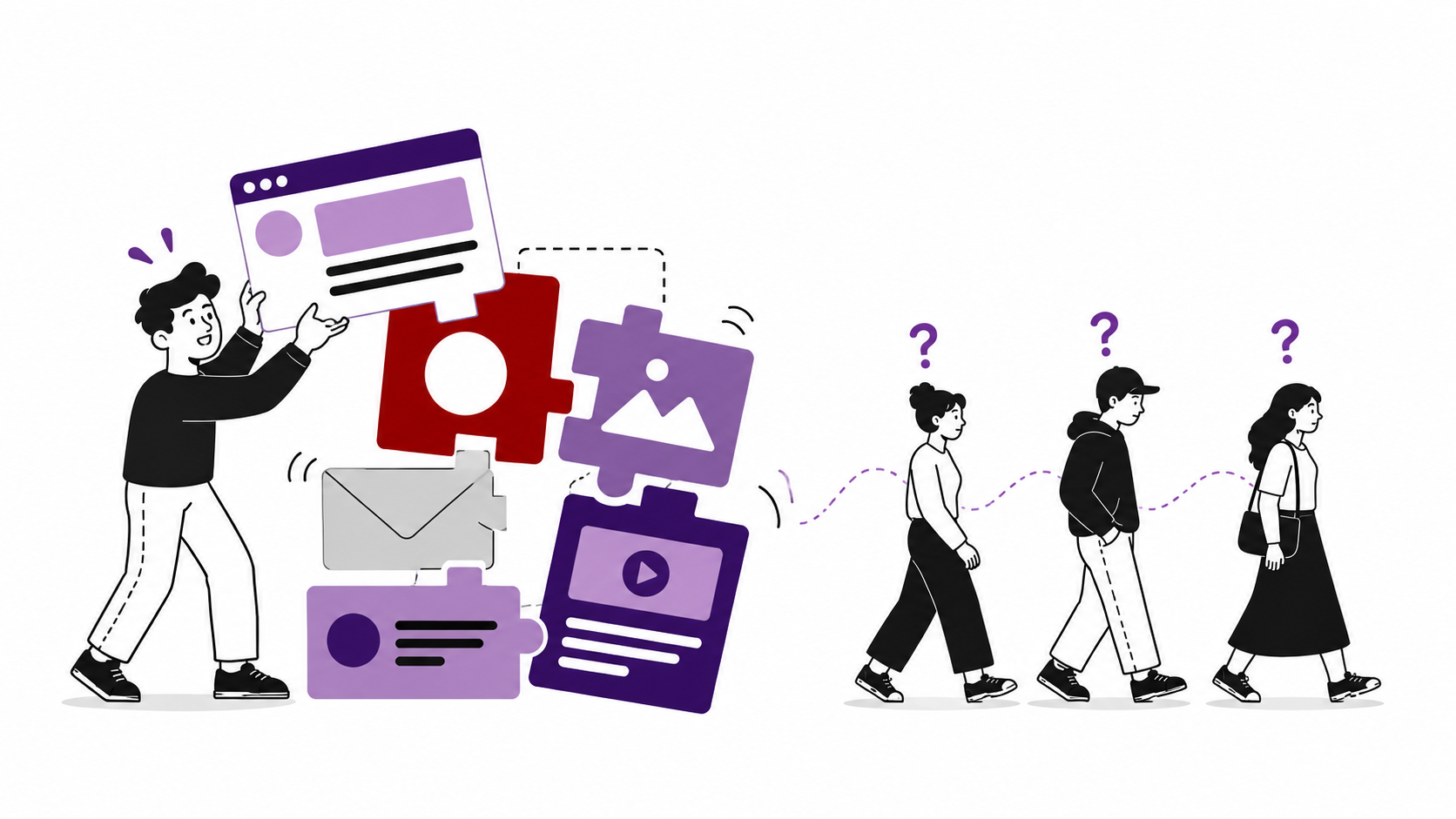
They may discover you through Google, see one of your social posts, read several reviews, visit your website and return through an email days later. To them, these are not separate strategies. They are all evidence of what it may be like to deal with your business.
This is why trust cannot be assigned to one channel.
A professional website can create confidence, but that confidence can quickly weaken when your reviews are several years old, your social media is inactive or your enquiry form does not work.
The reverse is also true. When every touchpoint communicates the same level of quality, clarity and care, confidence begins to compound.
That’s why trust shouldn’t be treated as the responsibility of one channel. It develops when every touchpoint works together to create a consistent customer experience.
The Trust Gap: What You Promise vs The Customer’s Experience
A trust gap appears when one touchpoint creates an expectation that another fails to meet.
For example:
- Your advertising promises a simple process, but your website is confusing.
- Your brand describes itself as responsive, but enquiries go unanswered for days.
- Your website promotes personalised service, but every email feels generic.
- Your content demonstrates expertise, but your service pages make vague claims.
- Your business promotes transparency, but pricing, policies or timeframes are difficult to find.
Each contradiction gives the customer a reason to pause, and deteriorates trust.
This does not mean every channel must look or sound identical. A search result, social post and onboarding email perform different jobs. But they should reinforce the same positioning, standards and promises.
Consistency isn’t about repeating one message everywhere. It is about ensuring each part of the experience supports the next.
Trust Across The Digital Funnel
One way to think about trust is through the three stages of the customer journey: Attract, where customers first discover your business, Activate, where they decide whether to engage, and Return, where ongoing experiences encourage loyalty and advocacy.
Attract: Are you Credible Enough to Investigate?
The Attract stage includes search results, AI recommendations, advertising, social media, directories, brand mentions and educational content.
At this stage, people are asking:
- Does this business appear legitimate?
- Does it understand my problem?
- Is the information current and credible?
- Are other people saying positive things about it?
Visibility may earn attention, but credibility determines whether someone looks further.
Exaggerated claims, outdated profiles, inconsistent contact details and generic content can all weaken trust before the customer reaches your website.
Activate: Have you Reduced Enough Uncertainty to Support Action?
Once someone reaches your website, landing page or sales process, the question changes.
Can you demonstrate that you understand what they need and can deliver it reliably?
Trust-building signals include:
- Clear service or product information
- Relevant testimonials and case studies
- Realistic claims
- Transparent policies and next steps
- An easy-to-use mobile experience
- Simple forms and checkout processes
- Visible contact and support options
Trust isn’t communicated through messaging alone. Functionality matters.
A broken page, unexpected fee or complicated checkout can make customers question the professionalism of the wider business. Conversion friction and trust friction often overlap.
Return: Did You Justify The Trust Already Placed In You?
Trust does not stop once someone converts.
Confirmation emails, delivery updates, onboarding, customer support, review requests and retention campaigns all influence whether confidence becomes loyalty.
The post-purchase experience determines whether customers return, recommend you or regret their decision.
A strong Return stage includes:
- Clear and timely communication
- Relevant follow-up
- Accessible support
- Honest management of delays or problems
- Useful retention messaging
- Responsible use of customer data
- A consistent experience after payment
This is where businesses prove whether the promises made during Attract and Activate were accurate.
Trust Influences Whether AI Recommends Your Business
Trust is no longer only influencing customers. It’s also influencing AI.
As AI-powered search becomes a bigger part of how people discover businesses, trust signals are becoming increasingly important. Whether someone asks ChatGPT, Google AI Mode or another AI assistant for a recommendation, those systems need confidence that the businesses they recommend are credible, authoritative and likely to deliver a positive experience.
Unlike traditional search, AI doesn’t rely on a single ranking factor. Instead, it builds confidence by evaluating a broad range of signals across your digital presence.
Some of the trust signals that help strengthen your visibility include:
- Comprehensive, helpful content that genuinely answers customer questions
- Well-written FAQs that demonstrate expertise
- Authentic customer reviews across trusted platforms
- Consistent business information across your website, Google Business Profile and other directories
- Testimonials and case studies that support your claims
- Mentions from reputable third-party websites
- A clear website structure that makes information easy to understand
- Consistent branding and messaging across every digital touchpoint
This is why Brand Visibility in the AI Age is no longer just about appearing in search results, it’s about creating enough consistent evidence for AI to confidently understand and recommend your business.
It’s also why Google visibility alone isn’t enough, businesses that invest in trust across their entire digital ecosystem are better positioned to be discovered by both customers and AI.
Ultimately, the same trust signals that influence a customer’s decision increasingly influence AI’s confidence too.
How to Strengthen Trust Across Your Digital Ecosystem
Start by reviewing the journey as a customer, not as the business that built it.
Search for your brand. Review your advertisements, profiles, website, forms, emails and post-purchase communication. Then ask:
- Is the information consistent?
Check your positioning, services, business details and claims across every relevant channel. - Are your claims supported?
Replace generic statements with useful content, specific examples, credible reviews and evidence of experience. - Where does uncertainty remain?
Look for unclear pricing, missing policies, vague timeframes, weak service descriptions or complicated next steps. - Does the experience match the promise?
Compare what your marketing says with what happens during enquiry, purchase, delivery and support. - Are your trust signals current?
Outdated reviews, neglected profiles and old information can suggest that the wider business is also inactive.
Final Thoughts: Trust Is Built Across Every Touchpoint
Customers don’t trust a business because it tells them to. They trust it when every relevant interaction gives them a reason to.
One strong review, campaign or webpage can start that process. It cannot carry the weight of the entire customer experience. The businesses that earn confidence are the ones whose visibility, messaging, proof, functionality and service consistently support the same expectation. That’s also what makes a business easier for AI platforms to understand, verify and confidently surface.
Trust is not built in one moment. It compounds across the entire digital ecosystem.