You have solid foundations, you’re bringing new customers in…you should be seeing strong, long-term growth, right? Well, it’s not actually as simple as that.
Because while acquisition gives your brand momentum, retention is what turns that momentum into sustainable, profitable growth.
Of course, acquisition is essential; it builds awareness, draws new people into your brand, and drives the initial conversion.
But focusing on retention is what transforms that initial interest into something more meaningful for your business. It’s what turns one-off buyers into long-term loyal customers, lifts their lifetime value, and creates the steady, sustainable growth your brand is looking for.
When you retain the customers you’ve already worked hard to earn, your marketing becomes more efficient, your revenue is more predictable, and your brand becomes stronger, all because you’ve built deeper relationships with your customers.
It’s important to note that the prerequisite to focusing on retention should be having solid foundations first, whereby you have a website that converts, clear messaging, consistent brand visibility, and solid acquisition channels already performing.
Once these pieces are working, retention becomes your most powerful growth lever…and one of the most cost-effective. In fact, it’s significantly cheaper to retain an existing customer rather than acquiring a new one.
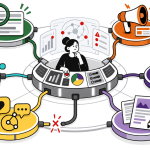
So let’s walk through what it takes to build a well-optimised retention engine, one grounded in clarity, strategy, and the framework we use every day with our clients: the Omni Online Retention Engine.
The Real Retention Gap: Why Customers Don’t Return
Most brands assume customers will return “when they’re ready.”
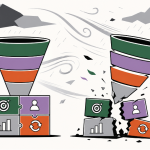
But the reality is that most customers don’t return at all, not because they don’t want to, but because the journey back isn’t clear, nor is their reason to come back to you.
Common retention gaps we see include:
- Customers make a first purchase and then never hear from the brand again
- The time to second or third purchase is too long
- Brands rely on discounts instead of enhancing the overall customer experience
- Customers slip away during the “in between” moments, which is where communication should be strongest
And when customers finally do think about repurchasing, they rarely go straight back to your site.
The Modern Customer Journey Has Completely Shifted
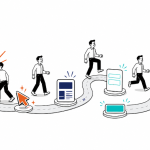
Even when your foundations are strong, customers don’t behave in a linear way. When they’re ready to repurchase, their first instinct is rarely to revisit your website.
They go to google, compare options, check reviews, and evaluate where they can buy with the most convenience.
What this tells us is that retention should be a multi-channel approach, as we cannot rely on customers remembering you from your emails alone, we want to reinforce your brand wherever your customer chooses to shop.
The Economics of Retention
As we mentioned at the start, it’s cheaper to keep the customers you have then to acquire new ones.
Acquiring a new customer is 5-7 times more expensive than retaining an existing one.
Retention improves your economics by:
- Lowering your blended CPA – when a larger share of revenue comes from returning customers, you rely less on paid acquisition, which reduces your overall cost per customer
- Increasing lifetime value – when customers continuously return, the total revenue you earn per customer grows significantly without increasing your acquisition spend
- Increasing average order value – repeat customers trust your brand more, making them naturally more likely to add complementary products, bundles, or higher-value items to their cart
- Creating predictable revenue – a strong base of returning customers provides a consistent stream of income, reducing the volatility that comes from relying solely on new customer spikes
- Reducing reliance on constant acquisition – When existing customers continue to buy, you don’t have to spend as aggressively on paid ads to keep revenue stable, easing pressure on your acquisition channels
- Improving margin stability – retained customers requires less marketing spend to convert, increasing the efficiently of each sale and strengthening your overall profit margins
And the cherry on top is that returning customers convert at a much higher rate and require significantly less marketing spend to re-engage. What this means is once your foundations are set, switching focus isn’t simply strategy, it’s financially essential.
Why Retention Only Works After your Foundations Are Set
A retention engine cannot fix what acquisition, messaging, or product education fail to start. Retention works best when:
- Customers clearly understand your product
- Their first experience is positive
- They can easily navigate your website
- Your value is visible across channels
- They receive consistent messaging from the start
In summary; build your base first, then you can build the engine that grows lifetime value on top of it.
Introducing the Omni Online Retention Engine
Once your foundation is working and new customers are flowing in, our 90-day Retention Engine helps you move them from first-time buyers to loyal customers, and it’s built on three pillars.
1. Communicate
Most brands underestimate how quickly customers forget about them after the first purchase.
Communication isn’t about sending more messages, it’s about sending the right messages, at the right time, through the right channels.
A strong communication layer includes:
- Post-Purchase Follow-Up: A warm, timely check-in shows customers you care beyond the sale. Simple touches like a thank-you note, usage tips, and a 7-day “how’s it going?” message keeps the relationship alive.
- Product-Specific Remarketing: Start light remarketing around day 30 to remind customers what they bought and why they loved it. This keeps your brand visible before they go searching again.
- Consistent Email Campaigns: Regular emails focused on value, not just discounts, keep customers engaged. Highlight products, benefits, and stories that reinforce why they chose you.
- Automations Running in the Background: Automations like abandoned checkout, replenishment, and win-back flows work quietly to keep customers moving forward. They ensure no one slips through the cracks.
- Social Reinforcement: Social media content reminds customers of your brand in a natural, everyday way. It supports your emails and ads without feeling repetitive.
2. Educate
Education is the bridge between buying something once and buying it again with intention.
The goal is to help customers understand:
- How to use what they purchased
- How it fits into their daily routine
- Why it works
- What complements it
- What will help them get better outcomes
We do this through:
- Product Usage Guidance: Clear instructions show customers exactly how to use what they bought and what results to expect. When people understand a product, they’re far more likely to repurchase.
- Bite-Sized Educational Content: Short how-tos, tips, and ingredient explainers make learning simple. Small pieces of value delivered often build long-term trust.
- Blogs & Long-Form Content: Blogs deepen brand authority by answering customer questions in detail. They’re powerful for customers who research before buying again.
- Loyalty Education: Help customers understand the perks they can earn and how to redeem them. When the value is clear, loyalty becomes a motivator, not a discount tool.
- Educational Social Content: Tutorials, routines, and FAQs shared on social help customers see the product in action. Real-world explanations make your brand more relatable and credible.
If you can make your customer feel confident and educated, they repurchase faster.
Motivate
Retention works best when the next step feels obvious. In doing so, we want to give customers the spark that moves them from intention to action.
Motivation isn’t about applying pressure, it’s about removing friction, adding clarity, and offering value.
We motivate customers through:
- Meaningful Loyalty Rewards: Loyalty perks should feel valuable without cheapening the brand. Small, thoughtful rewards encourage ongoing engagement.
- Timely, Strategic Promotions: Promotions timed around expected reorder windows gently nudge customers back. They shorten the natural buying cycle without creating dependency on discounts.
- Bundles & Rituals: Suggested bundles make it easy for customers to build a routine. When you remove friction, customers naturally add more to their cart.
- Replenishment Reminders: Reminders sent just before a product typically runs out help you catch customers before they begin searching elsewhere. This keeps the purchase journey inside your brand ecosystem.
- Social Proof & Reviews: Testimonials and reviews build confidence by showing real people getting real results. Social proof often is more convincing than any campaign.
- Referral Opportunities: Referral rewards turn loyal customers into advocates.
A simple give-and-get offer encourages sharing and builds community.
This isn’t about discounting. It’s about removing friction and reinforcing value.
Why Retention Must Be Multi-Channel
A customer might discover you on Meta, buy from your website, repurchase via a retailer, read reviews on Google, and redeem loyalty in email.
This encapsulates the reality of our modern digital, multi-channel age.
If your retention strategy isn’t built to live across the full journey, you leave space for competitors to step in.
Our approach keeps your brand consistent, clear, and compelling, no matter where your customer engages.
It’s not just one touchpoint. It’s a whole ecosystem.
What Success Looks Like
A functioning retention engine delivers:
- More customers coming back after their first order
- Shorter time between purchases
- Higher average order value
- A growing pool of engaged loyalists
- Less reliance on constant acquisition to hit revenue goals
Sustainable growth doesn’t come from spikes. It comes from stability.
Your 90-Day Activation Plan
If you want to retain your Cyber Week customers, start here:
1. Rebuild your post-purchase experience: This should feel human, helpful, and timely, not transactional.
2. Create an education content bank: Blogs, rituals, how-to guides, ingredient explainers.
3. Launch data-led remarketing: Remind customers of the products they bought, and why they chose you.
4. Build nurture loops, not one-off campaigns: Repeated exposure builds preference.
5. Make loyalty meaningful, not discount-heavy: Customers remember experiences — not codes.
6. Use bundles and replenishment to make the next step clear: Don’t make customers figure it out on their own.
The Opportunity Right Now
Your new customers are warm, they’re engaged, they’re paying attention.
But they won’t stay that way on their own; retention isn’t a campaign, it’s a strategic engine that runs quietly in the background, moving people from “I bought once” to “I’m with this brand for good.”
And when you get it right, revenue becomes more predictable, acquisition becomes easier, and your brand becomes stronger.
Ready to build your retention engine?
Book in a digital alignment audit with out team to help turn seasonal shoppers into long-term loyalists.