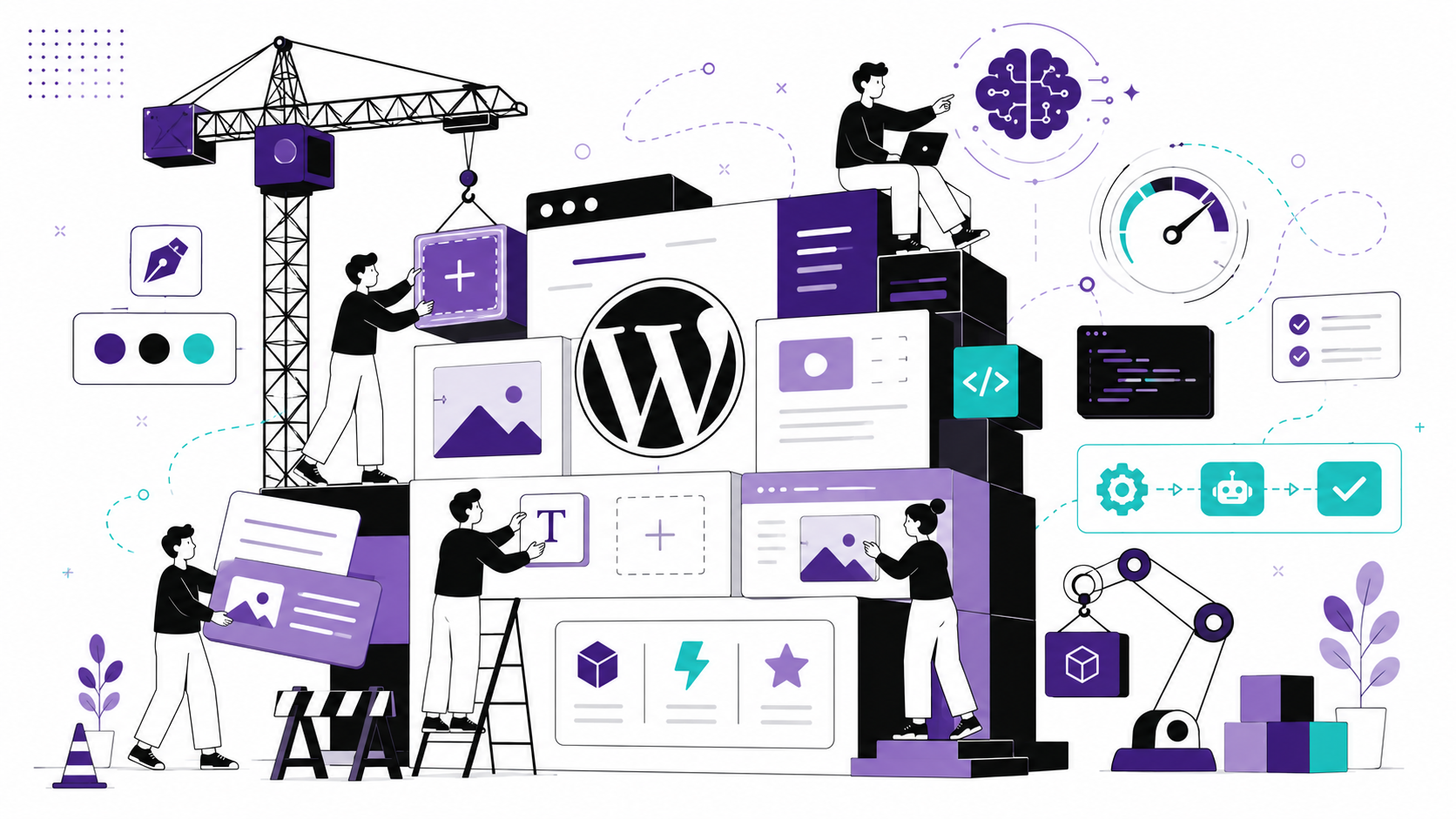
WordPress 7.0 has arrived, bringing one of the platform’s most significant updates in recent years!
This update introduces new AI infrastructure, improves content workflows, enhances the editing experience, and continues a broader trend towards reducing reliance on third-party plugins. For businesses, marketers, and website owners, these changes have implications that extend beyond day-to-day website management.
Rather than examining every new feature, it’s worth understanding what WordPress 7.0 reveals about the future direction of the platform and what that means for long-term website strategy.
Blog in a Snapshot
In this article, we’ll cover:
- Why WordPress 7.0 represents a broader platform evolution rather than a routine update
- How new AI infrastructure could influence future website management and content workflows
- The workflow and usability improvements that matter most for marketing teams
- Why WordPress continues to reduce dependence on third-party plugins
- What the update means for SEO, website performance, and ongoing maintenance
- Whether now is the right time to update your website
Why WordPress 7.0 Feels Different
Most WordPress releases focus on incremental improvements. WordPress 7.0 takes a more structural approach.
Several of the headline additions focus on making WordPress easier to manage, more adaptable, and better prepared for emerging technologies such as AI. Rather than simply adding new tools, the release improves the systems that support content creation, website administration, and long-term platform sustainability.
For website owners, this is arguably more important than any individual feature. Platforms that reduce complexity, improve workflows, and minimise technical overhead often create greater business value over time.
Which Changes Do We Recommend You Know?
AI Infrastructure Comes to WordPress
One of the most notable additions is the introduction of AI-focused infrastructure, including AI Connectors, the WP AI Client, and the Abilities API.
The significance isn’t that WordPress suddenly becomes an AI platform. Rather, WordPress is creating a common framework that allows AI-powered tools to integrate more consistently across the ecosystem.
Over time, this could lead to more reliable AI integrations, fewer compatibility issues, and a smoother path for businesses looking to adopt AI-driven content, automation, and productivity tools.
Better Content Workflows
Content creation rarely happens in isolation. Marketing teams often involve writers, editors, SEO specialists, designers, and stakeholders throughout the publishing process.
WordPress 7.0 introduces improvements such as visual revisions, block-level commenting, and enhanced editorial workflows that make collaboration easier.
For businesses publishing content regularly, these changes can reduce friction, improve governance, and support more efficient content operations.
Less Reliance on Plugins
A quieter but equally important trend is WordPress’ continued move towards native functionality.
Features such as breadcrumb blocks, icon blocks, and expanded design controls reduce the need for additional plugins.
This matters because plugin-heavy websites often face increased maintenance requirements, security risks, performance issues, and compatibility conflicts. By incorporating more functionality into WordPress core, website management becomes simpler and potentially more stable.
What Does WordPress 7.0 Means for SEO?
WordPress 7.0 is unlikely to deliver direct ranking improvements on its own. However, several aspects of the update can contribute to stronger SEO outcomes over time:
- Improved content workflows can help teams publish and optimise content more efficiently.
- Reduced plugin dependence can support cleaner website architecture and maintenance.
- Accessibility improvements contribute to better user experiences.
- Enhanced responsive design controls can support stronger mobile experiences.
The SEO benefit isn’t the update itself. It’s the environment the update creates for better website management and content execution.
Should You Update?
For most businesses, updating to WordPress 7.0 will make sense, but preparation remains important.
Before updating:
- Create a complete backup.
- Test the update in a staging environment.
- Review plugin compatibility.
- Confirm hosting and PHP requirements.
- Monitor website performance after deployment.
A measured approach is always preferable to rushing major platform changes into production.
Final Thoughts
WordPress 7.0 is best viewed as a platform evolution rather than a feature release.
The introduction of AI infrastructure, improvements to content workflows, and the continued reduction of plugin dependence all point towards a more integrated and sustainable approach to website management.
For businesses, the most important takeaway isn’t necessarily what WordPress 7.0 adds today.
It’s what the update reveals about where the platform is heading over the next several years, towards simpler management, stronger workflows, better integrations, and a more future-ready foundation for digital growth.