Email marketing is one of the most effective ways of nurturing your leads, strengthening customer relationships, and generating consistent revenue over time.
Unlike paid advertising, which stops the moment the budget is paused, emails allow businesses to build ongoing communication with people who have already shown interest in their brand.
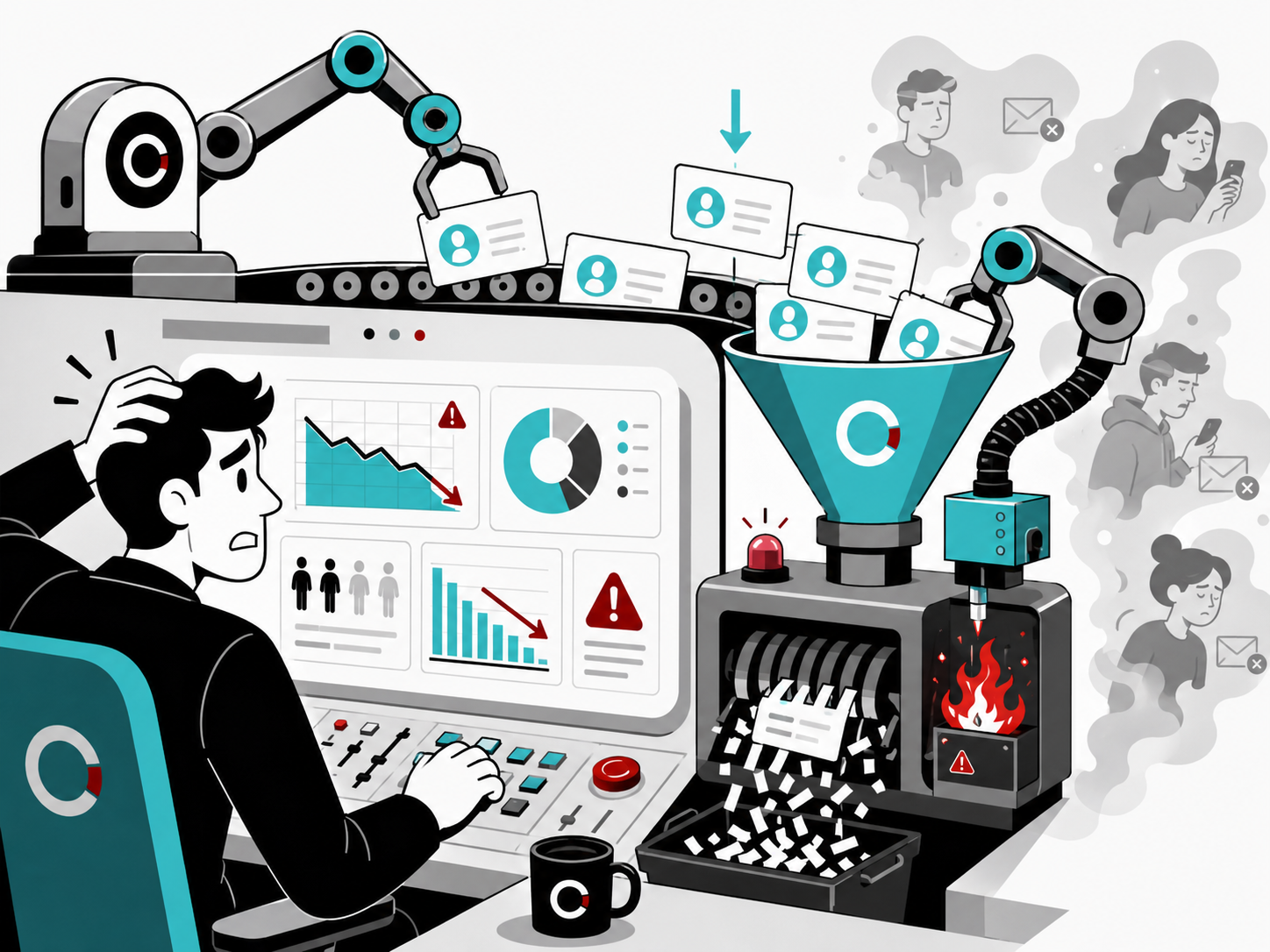
However, many businesses fall into the same trap of building a few automated email flows, switching them on, then rarely looking at them again.
When we refer to email automations, we’re talking about automated email sequences triggered by a customer action or behaviour. Common examples include:
- Welcome sequences: A series of emails sent when someone first subscribes to your list, designed to introduce your brand, educate the subscriber, and guide them towards a first purchase or enquiry.
- Post-purchase flows: Emails sent after someone buys from you, often including onboarding information, product education, cross-sells, review requests, or retention-focused messaging.
- Win-back campaigns: Automated emails designed to re-engage inactive subscribers or previous customers who haven’t interacted with your business in a long time.
- Abandoned cart emails: Emails triggered when someone adds products to their cart but leaves without completing their purchase.
- Lead nurture sequences: Educational or trust-building emails sent to prospects over time to help move them closer to making a decision.
These automated systems can be incredibly valuable when managed properly. However, over time, those emails quietly become less effective when offers become outdated, customer behaviour changes or segments stop making sense. Some contacts disengage entirely, while the emails continue sending in the background unchecked.
An automated email flow is not a static asset, it’s part of your customer experience. If it’s outdated, disconnected, or poorly maintained, it doesn’t just reduce performance, it can actively damage trust, deliverability, and conversion rates over time.
Blog in a SnapShot
In this blog, we’ll cover:
- Why “set and forget” email automations quietly damages performance over time
- How poor list hygiene affects deliverability and sender reputation
- The difference between demographic segmentation and behaviour-based automation
- Why disconnected systems create unreliable customer experiences and reporting
- How to audit and simplify your automation strategy for sustainable long-term performance
1. Your Workflows Are Stale, and Nobody’s Checked Them
One of the most common email marketing mistakes is surprisingly simple: businesses set up automated emails once, then rarely review them again.
An email flow might work well when it’s first created, but businesses change constantly. Products evolve, offers change, customer behaviour shifts, and branding gets updated. If your automated emails don’t change alongside your business, they slowly become less relevant over time.
For example:
- Welcome emails reference outdated offers
- Product recommendations no longer make sense
- Landing pages linked in sequences have changed
- Messaging no longer aligns with current positioning
- Customer journeys evolve, but the automation does not
Over time, these issues compound quietly. No single mistake looks catastrophic, but together they reduce trust, authority, engagement, and conversion rates.
This becomes especially problematic when you realise how connected your emails are to the rest of your marketing, as they can influence:
- Paid advertising audiences
- CRM systems
- Sales follow-ups
- Customer service communication
- Website traffic and returning visitors
Meaning that one outdated email flow can affect more than just email performance.
A simple quarterly automation audit solves more problems than most businesses expect. That audit should include:
- Reviewing all of your active email flows
- Testing every trigger, links, buttons and condition
- Checking offers and messaging accuracy
- Reviewing engagement metrics over time
- Identifying drop-off points
- Confirming ownership internally
2. Your Email List Isn’t As Clean As You Think
Many businesses assume that once someone joins their email list, they should stay there forever. However this approach can damage your email performance over time.
Every email platform, including Gmail and Outlook, monitors how people interact with the emails you send. They look at signals such as:
- Whether people open your emails
- Whether they click links
- Whether they reply or engage
- Whether they unsubscribe
- Whether they mark your emails as spam
- Whether they ignore your emails repeatedly
These signals help inbox providers decide whether your emails are useful and trustworthy. If too many people stop engaging with your emails, your future campaigns become more likely to land in spam folders or promotions tabs instead of the main inbox.
This is why email list quality is so important.
So if you’re sending emails to people who haven’t engaged in months, or even years, to email addresses that may no longer exist, or people who aren’t interested in your business anymore, your sender quality is deteriorating and you could eventually be marked as spam.
One important metric to watch is your bounce rate. A bounce happens when an email cannot be delivered to the recipient. As a general rule, a bounce rate above 2% can indicate your list needs attention.
Poor list quality can lead to:
- Lower open and click rates
- More emails landing in spam folders
- Weaker performance from automated email flows
- Inaccurate reporting and customer data
- Reduced trust in your brand communication
We get it, cleaning your email list can cause your subscriber number to shrink, however you’re far better off with a smaller list of engaged subscribers that a larger one of those who aren’t interested in your business.
A healthier email strategy includes:
- Regularly removing invalid email addresses
- Identifying subscribers who haven’t engaged in a long time
- Running re-engagement campaigns before removing inactive users
- Monitoring spam complaints and unsubscribe rates
- Reviewing where new subscribers are coming from to ensure lead quality
Your email list is not just a database. It directly affects whether future emails are seen, ignored, or filtered out completely.
3. You’re Segmenting by Demographics, Not Behaviour
Many email automation strategies still rely on static segmentation.
Industry. Age. Company size. Location.
These data points are useful, but they rarely explain buying intent on their own. True personalisation comes from behaviour.
Someone who downloads three educational resources over two weeks is demonstrating a very different level of intent compared to someone who subscribed six months ago and never engaged again.
Treating both users the same because they share demographic characteristics creates irrelevant automation.
Using someone’s first name in a subject line is not meaningful personalisation if the content ignores what they actually care about.
Behaviour-based automation is far more effective because it adapts to signals like:
- Pages viewed
- Resources downloaded
- Products browsed
- Demo requests
- Repeat website visits
- Email engagement
- Purchase history
The strategic advantage here extends beyond email performance.
Behavioural segmentation improves:
- Paid media audience quality
- CRM lead scoring
- Sales handover timing
- Content distribution relevance
- Conversion efficiency across channels
Good automation responds to intent, not just identity.
4. Your Tools Aren’t Talking to Each Other
Most businesses use multiple platforms to manage marketing, sales, and customer data, such as email software, CRMs, ecommerce platforms, and advertising tools. Issues arise however when those systems stop communicating to each other properly.
For example, someone unsubscribes from your emails, but because your systems aren’t connected correctly, they continue receiving promotional emails anyway.
This can lead to:
- Poor customer experiences
- Compliance issues
- Inaccurate reporting
- Confusing or outdated customer data
Disconnected systems also affect more than email marketing. They can weaken ad targeting, sales follow-ups, conversion tracking, and customer retention efforts.
As businesses grow, these issues become harder to manage because teams start working from conflicting information.
Many businesses invest in automation tools, but overlook the importance of integrating them properly behind the scenes.
Automation is only effective if the data flowing through it is accurate and consistent.
5. You’ve Built Workflows on Top of a Broken Process
One of the biggest mistakes businesses make is automating a process before fixing the problems within it.
Automation doesn’t improve a poor customer journey, it simply makes the problems happen faster and at a larger scale.
For example:
- A confusing onboarding process becomes an automated confusing onboarding process
- Weak follow-up emails become automated weak follow-up emails
- Poor lead handovers become faster poor lead handovers
Before setting up automated emails, businesses should first understand how the process works manually.
Ask questions like:
- Where are the leads dropping off?
- Where does confusion happen?
- Which steps actually help drive conversions?
- What does the customer experience feel like?
Once the process works consistently, automation can help improve efficiency and scale it properly.
The goal should not be to automate everything possible. The goal should be to create a smoother and more effective customer experience.
6. Over-Segmentation Is a Real Problem Too
Segmenting your email list helps you send more relevant emails to different groups of people. But many businesses take this too far.
Over time, they create dozens of highly specific audience groups based on small actions, such as:
- People who opened an email but didn’t click
- People who clicked but didn’t enquire
- People who visited a pricing page twice
- People who downloaded one resource but ignored another
While these segments may seem useful individually, they often become difficult to manage collectively.
The result is usually:
- Small inactive audience groups
- Confusing or duplicated email flows
- More maintenance and troubleshooting
- Reporting that becomes difficult to interpret
This becomes even harder when new staff members inherit the system and are too nervous to change anything in case they break it.
In many cases, simpler segmentation performs better because it is easier to maintain, review, and improve over time.
Good email marketing does not need to be overly complicated. The strongest systems are usually the clearest and easiest to manage.
7. Using AI to Send More, Not Better Emails
AI has lowered the barrier to producing email content quickly.
That does not automatically improve automation strategy.
One of the biggest risks businesses face in 2026 is treating AI as a volume engine rather than a decision-support tool.
More emails do not necessarily create more engagement. In many cases, they accelerate subscriber fatigue and damage sender reputation.
AI is most valuable when improving decision quality, not simply increasing output.
Used strategically, AI can support:
- Send-time optimisation
- Subject line testing
- Engagement analysis
- Predictive segmentation
- Workflow optimisation
- List health monitoring
Used poorly, it creates endless low-quality communication that weakens brand trust over time.
This matters because automation now influences brand perception directly. Subscribers increasingly judge businesses not only by what they sell, but by how intelligently and respectfully they communicate.
The businesses benefiting most from AI-assisted automation are still applying human judgement, editorial oversight, and strategic restraint.
AI can accelerate systems. It cannot replace strategy.
Final Thoughts: What Your Automated Emails Are Actually Doing
Automated emails influence far more than just email performance. They affect customer experience, lead quality, repeat purchases, brand trust, and even how effective your broader marketing becomes.
The challenge is that many problems build slowly in the background.
An outdated email here, a broken link there, a disengaged audience segment that nobody notices for months.
Over time, those small issues begin affecting performance across the entire system. A useful exercise is simple: When was the last time someone in your business opened every automated email flow and reviewed it from the customer’s perspective?
Not just the reporting dashboard, but the actual experience.
Because the issue is rarely whether automated emails exist. The real issue is whether those emails still reflect your business, your customers, and the way people behave today.
That’s why regular reviews matter. Not just as a technical task, but as an important part of maintaining a strong customer experience over time.